
Understanding the Coating Hardness Testing ASTM D3363
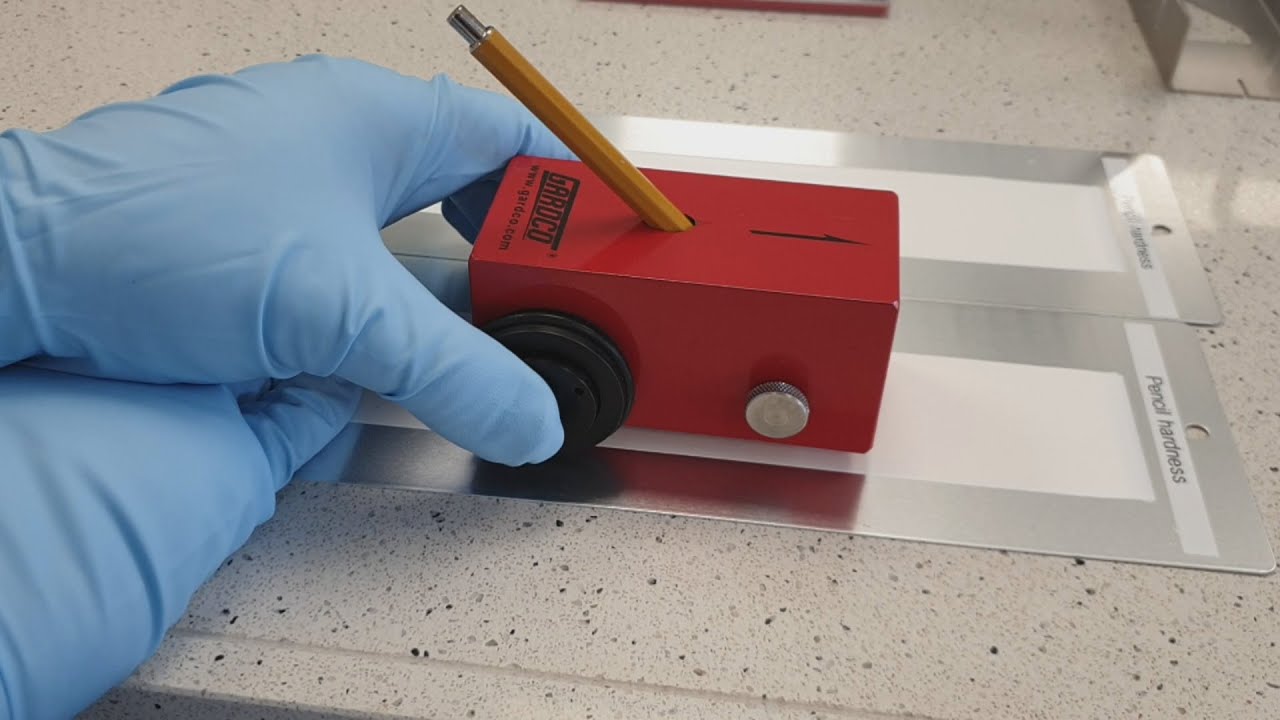
Let’s be real for a second. You spend good money on your ride. Whether it’s a lifted truck that eats mud for breakfast or a sleek sedan that turns heads on the highway, you want that paint job to last. You’ve probably heard folks throwing around terms like “ceramic coating,” “9H hardness,” and “scratch resistance” like they’re going out of style. But what does any of that actually mean?
If you’re looking to protect your investment, you need to understand the science behind the shine. That brings us to the Pencil Hardness Test, specifically the ASTM D3363 standard. It sounds like something from a high school geometry class, but it’s actually the industry standard for measuring just how tough a coating really is.
Before you drop hundreds (or thousands) on paint protection, you need to know if the product can actually take a beating. We’re going to break down exactly what this test is, how it works, and why it matters for your vehicle. No fluff, just the facts.
What is ASTM D3363?
In the world of testing and materials, ASTM International (formerly known as the American Society for Testing and Materials) is the big dog. They set the rules. When you see “ASTM” attached to a test, you know it’s a standardized, recognized procedure, not just some marketing gimmick cooked up in a back office.
ASTM D3363 is the specific designation for the “Standard Test Method for Film Hardness by Pencil Test.” In plain English? It’s a way to measure how hard a coating—like paint, varnish, or lacquer—is by trying to scratch it with pencils of varying hardness.
This standard is crucial because it gives manufacturers and customers a common language. If one company says their coating is “hard” and another says theirs is “super hard,” that means nothing. But if one rates a 2H and the other rates a 9H under ASTM D3363, now we’re comparing apples to apples. It provides a quantifiable benchmark for durability.
How the Pencil Hardness Test Works
The concept is deceptively simple, but the execution requires precision. You don’t just grab a No. 2 pencil from your junk drawer and start stabbing your hood. The test is performed under controlled conditions to ensure accuracy.
The Setup
First, the coating needs to be fully cured. You can’t test wet paint. The test is usually done on a flat, rigid surface. The pencils used aren’t your standard writing utensils; they are calibrated drafting pencils ranging from soft (6B) to hard (9H).
The Procedure
The operator prepares the pencil by stripping the wood away to expose the lead, leaving it as a flat cylinder. They then hold the pencil at a 45-degree angle against the coated surface.
Here is the kicker: they push the pencil forward with a specific amount of force. The goal is to see if the pencil cuts through or gouges the coating.
The Rating
The test starts with the hardest pencil (9H). If that pencil scratches the surface, they move down to the next hardest (8H), and so on. The “Pencil Hardness” rating is defined by the hardest pencil that fails to scratch the coating.
So, if a 9H pencil scratches the paint, but an 8H pencil slides across without leaving a mark, the coating is rated 8H. It’s a process of elimination that separates the weak coatings from the heavy-duty protectors.
Breaking Down the Scale: What Pencils are Required?
To understand the results, you have to understand the tools. The scale used in ASTM D3363 covers a wide spectrum of graphite hardness.
The scale typically runs like this, from softest to hardest:
- 6B – B: These are the softest leads. Think artists’ sketching pencils. They are dark, smudgy, and unlikely to scratch anything harder than butter.
- HB – F: This is the middle ground. Your standard school pencil falls around here.
- H – 6H: Now we are getting into the harder stuff. These are used for technical drafting where fine lines are needed.
- 7H – 9H: This is the top tier. These leads are extremely hard and contain more clay filler than graphite.
When a ceramic coating company claims a “9H” hardness rating, they are stating that their product can withstand the pressure of a 9H pencil without gouging. That is the top of the scale for this specific test.
A Note on the Myth of 10H: You might see some marketing claiming “10H” hardness. On the standard pencil scale, 9H is usually the max. Anything claiming to be harder than that is often referencing the Mohs scale of mineral hardness (where diamond is a 10), which is an entirely different measurement system. And just for clarification, there is NO liquid coating that is as strong as a diamond! Don’t get fooled by mixed-up metrics.
*SPECIAL NOTE: There are some labs – mainly in Japan and Korea- that offer a 10H pencil scale test. This uses a specialized 10H-rated graphite pencil lead; however, it is not recognized as an ASTM Standard method of testing. If you see a coating that claims to have been tested to 10H hardness ASTM, you can and should immediately eliminate that from your list of coating options.

What Materials Can Be Tested?
While we are focused on vehicle paint and protection here, the ASTM D3363 test is versatile. It’s not just for cars. It can be performed on a variety of substrates, provided the coating is applied correctly.
Common materials tested include:
- Organic Coatings: Paints, varnishes, lacquers, and resins.
- Metal Substrates: The test is frequently performed on coated metal panels (like car body panels) to simulate real-world application.
- Wood and Plastic: As long as the surface is rigid enough to withstand the pressure of the pencil without deforming the material underneath, it can be tested.
However, the substrate matters. If you apply a super-hard coating to a soft, spongy rubber surface, the test won’t be accurate because the material underneath will give way before the coating does. For the most accurate results, a rigid backing—like steel or glass—is preferred.
The Good, The Bad, and The Scratchy
Like any scientific test, the Pencil Hardness Test has its pros and cons. It’s the industry standard for a reason, but it’s not the only factor you should care about.
The Advantages
- Standardization: Because it follows ASTM protocols, it allows for direct comparison between different brands and products.
- Cost-Effective: It doesn’t require million-dollar machinery. This keeps the cost of development down, which eventually helps keep the price down for you, the consumer.
- Speed: It provides relatively quick results regarding cure validation and coating consistency.
The Disadvantages
- Human Error: Since the test is often done by hand, there can be slight variations in the angle or pressure applied by the operator.
- Limited Scope: It measures scratch hardness, specifically “gouge” resistance. It doesn’t necessarily measure impact resistance (like a rock chip) or abrasion resistance (like swirl marks from a dirty rag).
- The Substrate Factor: As mentioned earlier, the hardness of the material under the paint can influence the result. A hard coating on a soft hood might test lower than the exact same coating on a hard glass panel.
The Bottom Line
When you are looking to armor up your truck or car, seeing a “9H” rating on a bottle of ceramic coating is a good sign. It means the product has been tested against the toughest standard in the pencil hardness game. It tells you that the coating creates a rigid, durable shell that resists gouging better than factory clear coat.
However, don’t treat it as a magic forcefield. A 9H rating means it’s tough, not invincible. It will help prevent light scratches from bushes on the trail or poor washing techniques, but it won’t stop a shopping cart traveling at Mach 1.
Use the ASTM D3363 rating as a baseline. It proves the manufacturer cares about standards and testing. Combine that knowledge with proper maintenance and realistic expectations, and you’ll keep your ride looking showroom ready for the long haul.
How to Shop for High Quality Coatings Like a Pro
Next time you are considering a ceramic coating service or buying a high-end protectant, ask the hard questions.
- Ask for the Testing Data: Professional coating manufacturers should have Technical Data Results openly available to consumers. This includes the completed ASTM test, the test’s purpose, and the criteria (how the coating was tested and the results).
- Look for the Official ASTM Codes: Don’t just look for “Salt Resistant.” Look for “ASTM B117.”
- Trust American Standards: While there are other standards organizations (like ISO), ASTM is homegrown and rigorous. Supporting companies that test to these standards often means supporting quality manufacturing.
Don’t Gamble with Your Paint
Your vehicle is likely the second most significant investment you’ll make, right after your house. You wouldn’t use unverified shingles on your roof, so why put unverified chemicals on your paint?
ASTM testing is the benchmark for quality. It separates the pros from the pretenders. It gives you the confidence that the “armor” you’re putting on your car is actually armor, not just a glossy raincoat. When you choose products that adhere to these standards, you aren’t just protecting a car; you’re protecting your wallet and your peace of mind. This is why Icon Rocklear invested THOUSANDS of dollars in ASTM testing nearly a decade ago when they launched their paint protection coating. And you’ll see the completed tests, along with results, directly on their HOME PAGE.
Drive it hard, keep it clean, and trust the science.