
What Does Scratch Resistant Mean for Your Paint Coating in Virginia?
Let’s cut to the chase. You see “scratch resistant” slapped on all sorts of paint coatings and protective films. But what does it actually mean when it comes to your vehicle’s finish? Is it a bulletproof shield or just some fancy marketing talk? If you’re serious about protecting your ride, you need to know the real deal behind the label.
This guide will break down exactly what “scratch resistant” implies for paint coatings, how it’s tested, and what you should look for to ensure you’re getting genuine protection, not just empty promises.
Understanding “Scratch Resistant”
First things first: no coating is completely scratch-proof. If someone tries to sell you a product that they claim can’t be scratched, run the other way. If you perceive that the coating you’re buying is not going to be scratched, make sure to get clarification from the coating manufacturer, so you don’t have buyers remorse.
So – let’s get to it. The term “scratch resistant” means a coating has a higher-than-average resistance to minor abrasions. Think of things like car wash brushes, road grit kicked up by other vehicles, or an accidental scrape from a jacket zipper. It also means that the coating is providing a sacrificial layer to protect your OEM paint or specifically the clear coating. The coating is intended to protect that soft, easily scratched surface.
A quality scratch-resistant coating, like a ceramic coating or a high-end paint protection coating (Icon Rocklear), has a harder surface than standard factory clear coats. This hardness allows it to shrug off the light scratches and swirl marks that would otherwise mar your paint, keeping it (the PAINT) looking pristine for years. It’s about resilience, not invincibility.
MOST coatings that boast scratch resistance can’t be fixed. To remove those surface scratches, a professional detailer (or coating installer) will have to polish them out. This significantly compromises the coating’s integrity and flat, hydrophobic top layer. In order for the coatings ‘performance to return, they’ll have to apply a new layer.
HOWEVER, a product like Icon Rocklear CAN be fixed – without removing significant parts of the coating itself. We’ll explain that a bit more further into this article.

Factors Affecting Scratch Resistance
Not all “scratch-resistant” products are created equal. Several factors determine how well a coating will actually hold up against daily wear and tear.
Coating Hardness
The primary factor is the hardness of the coating itself. This is often measured on the Mohs scale or using a pencil hardness test (more on that later). A harder coating provides a more durable barrier between your paint and the outside world. For example, many professional-grade ceramic coatings cure to a hardness of 9H on the pencil scale, which is significantly harder than the typical 2H-4H of a factory clear coat.
Flexibility and Elasticity
A good coating isn’t just hard; it’s also flexible. Some of the best products, particularly high-quality PPFs, have self-healing properties. This means minor scratches on the film’s surface can actually disappear when heated by the sun or a heat gun. This elastic quality allows the material to absorb an impact and return to its original form.
*KEY POINT: The ‘self-healing’ effect associated with coatings is limited to the early term of the coating (meaning, only a few months after the coating has been installed). The reason for this is that coatings, all coatings, harden from the bottom to the top. The top layer is where these scratches are embedded. In most cases, the ‘curing via hot water, sun, or heat gun is only possible during the first few months. After that, the top coat fully cures, and requires paint correction to remove.
Coating Thickness
The thickness of the coating, measured in microns (µm), also plays a role. A thicker layer provides a more substantial buffer. While a ceramic coating adds a few microns of protection, a paint protection film offers a much thicker barrier, providing superior resistance against deeper scratches and rock chips.
How is Scratch Resistance Tested?
So, how do manufacturers back up their claims? They use standardized tests to measure a coating’s durability.
One of the most common methods is the ASTM D3363 Pencil Hardness Test. It sounds simple, and it is. Technicians use a set of pencils with varying graphite hardness (from 9B, the softest, to 9H, the hardest) at a 45-degree angle to try and scratch the coated surface. A coating’s rating is the hardest pencil it can resist without leaving a scratch. This gives you a tangible way to compare different products.
Another test involves using automated machines to simulate real-world wear, like the repeated brushing of a car wash, to measure how the coating withstands abrasion over thousands of cycles.
Where Are These Coatings Used?
Scratch-resistant coatings are essential for any part of a vehicle that takes a beating. Their applications are widespread:
- Automotive Finishes: Protecting the paint on cars, trucks, and motorcycles from rock chips, swirl marks, and environmental contaminants.
- Wheels: Guarding expensive rims against brake dust, which can be corrosive, and curb rash.
- Marine Applications: Protecting boats and yachts from saltwater, UV rays, and scuffs from docking.
- Aviation: Shielding aircraft from the harsh conditions of high-altitude flight.
Benefits and Limitations
Investing in a quality scratch-resistant coating offers clear advantages.
Benefits:
- Maintains the vehicle’s “like-new” appearance for longer.
- Increases resale value by preserving the original paint.
- Reduces the need for frequent polishing and paint correction.
- Provides protection against UV rays and chemical stains.
Limitations:
- They are not scratch-proof and won’t protect against deep gouges or vandalism.
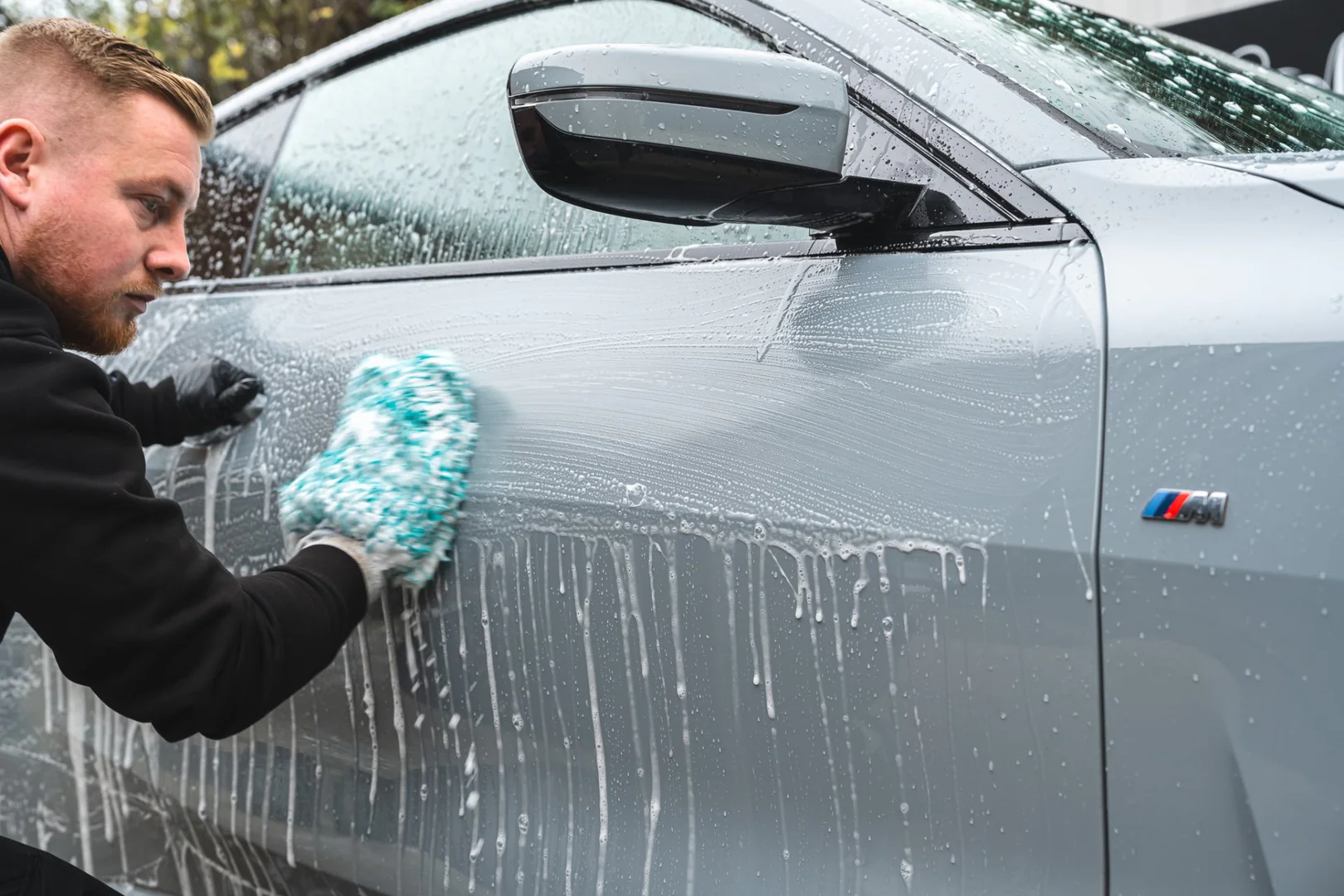
- They can be scratched (or swirl marks) when improper washing techniques are used.
- Most scratch-resistant coatings can’t be fixed if they are scratched. They can however be removed via paint correction, but reinstallation is often required.
- The quality of the application is just as important as the product itself. A poor install will deliver poor results.
- High-quality coatings represent a significant investment upfront.
Choose the Coating for Your Vehicle in Virginia
When it comes to protecting your investment, understanding the language is half the battle. “Scratch resistant” isn’t just a buzzword; it’s a measurable quality that separates top-tier protection from the rest.
By focusing on products with proven hardness, flexibility, and a professional installation, you can equip your vehicle with a durable shield that keeps it looking sharp for the long haul.
Look for products like Icon Rocklear that are transparent about their testing data and are backed by a solid warranty. Making the right choice means you can spend more time enjoying your vehicle and less time worrying about every little scrape.
If you’d like to locate a certified Icon Rocklear installer in Virginia, please fill out the form below.