How to Wash Your Icon Rocklear Coated Vehicle

How to Wash Your Icon Rocklear Coated Vehicle

How to Wash Your Icon Rocklear Coated Vehicle

Getting your vehicle coated with Icon Rocklear in Virginia is just the beginning of your journey to maintaining that showroom shine. The real question isn’t whether your coating will protect your paint—it’s how you’ll keep it looking its absolute best.

Here’s the thing: maintaining an Icon Rocklear coating isn’t rocket science. We’re not going to hit you with a complicated 47-step process that requires you to become a professional detailer overnight. Instead, we’ve designed our system around one simple philosophy: keep it clean when it’s dirty, and make sure it’s dry when you’re done.

This informative guide will walk you through our straightforward approach to washing your Icon Rocklear coated vehicle, proving that premium protection doesn’t require premium complications. For starters, take a few minutes to watch our video below – for the basics on how and when you should wash your vehicle’s that are protected with Icon Rocklear’s paint protection coating.

However, for those DIY enthuisasts, we’ve also added a 2nd video that will show you how the PROS at Icon Rocklear Virginia HQ complete their detailed car washes. 

Icon Rocklear Virginia provided a nice range of options. I particularly like the warranty and “fixability” of Icon Rocklear (used on the paint).The rest of the car was ceramic coated. Head to toe treatment. My car is six years old and it looks brand new. Very happy. I just use a foam cannon, rinse it off, and it sparkles! Because the car has “no substitute.”

Mike F.

Vehicle Owner

The Icon Rocklear Difference: Simplicity Over Complexity

Unlike those professional ceramic coating companies that hand you a manual thicker than your vehicle’s owner’s guide, Icon Rocklear takes a different approach. We don’t require you to follow stringent, DIY enthusiast-level washing processes. You won’t need to invest in expensive professional detailing products or industrial-grade machines.

Our coating is engineered to work with your lifestyle, not against it. That means you can maintain your vehicle’s protection without turning every wash into a weekend project or breaking the bank on specialized equipment.

The beauty of Icon Rocklear lies in its durability and user-friendly maintenance. While other coatings might demand specific pH-balanced shampoos, designated wash mitts, and temperature-controlled environments, we keep things real. Your coating will perform whether you’re washing in your driveway on a Saturday morning or taking it to your trusted local car wash.

The Three-Step Icon Rocklear Washing Method

Step 1: Wash Every Two Weeks

Consistency beats intensity every time. Whether you’re the type who loves spending Saturday mornings with a foam cannon in hand or you prefer the convenience of a local hand car washing facility, the key is maintaining a regular schedule.

Why two weeks? This timeframe prevents stubborn debris from bonding to your coated surface. Road salt, tree sap, bird droppings, and other contaminants become increasingly difficult to remove the longer they sit on your vehicle. By washing every two weeks, you’re working with your coating, not against it.

Hand washing enthusiasts can stick to their preferred methods. Your Icon Rocklear coating won’t be damaged by proper hand washing techniques. Use your favorite car shampoo, work from top to bottom, and rinse frequently.

Foam cannon fans can continue using their equipment without worry. The pressurized foam helps lift dirt and debris before you even touch the surface, which is exactly what your coating appreciates.

Professional wash facilities are perfectly acceptable, but choose wisely. Hand car washing facilities staffed by actual humans who understand proper washing techniques will treat your coated vehicle with the respect it deserves.

Pro Tip: Avoid Touch Washing Facilities

Here’s where we need to have a serious conversation about those industrial touch washing facilities. You know the ones—those automated car washes with brushes that have seen more vehicles than a used car salesman.

While your Icon Rocklear coating is tough enough to handle most situations, those filthy, scratch-producing automatic washers are looking for a fight. The brushes collect debris from every vehicle that passes through, turning them into sandpaper-like scratches waiting to happen.

Touchless locations are a different story entirely. These facilities use high-pressure water and specialized detergents to clean your vehicle without physical contact. They’re a great option when you need a quick clean and don’t have time for a proper hand wash.

Remember: while Icon Rocklear can handle minor scratches and we can fix more significant damage, prevention is always cheaper than repair. Save yourself the expense and headache by choosing your washing method wisely.

OK – now for you DIY enthusiasts, here is the video we teased above – which explains how we complete routine maintenance washes for Icon Rocklear coated vehicles. 

Step 2: Don’t Let Your Vehicle Sit Wet

Water spots are the enemy of every coating and protective film on the market. These mineral deposits might seem harmless, but they can make even the most expensive coating look terrible.

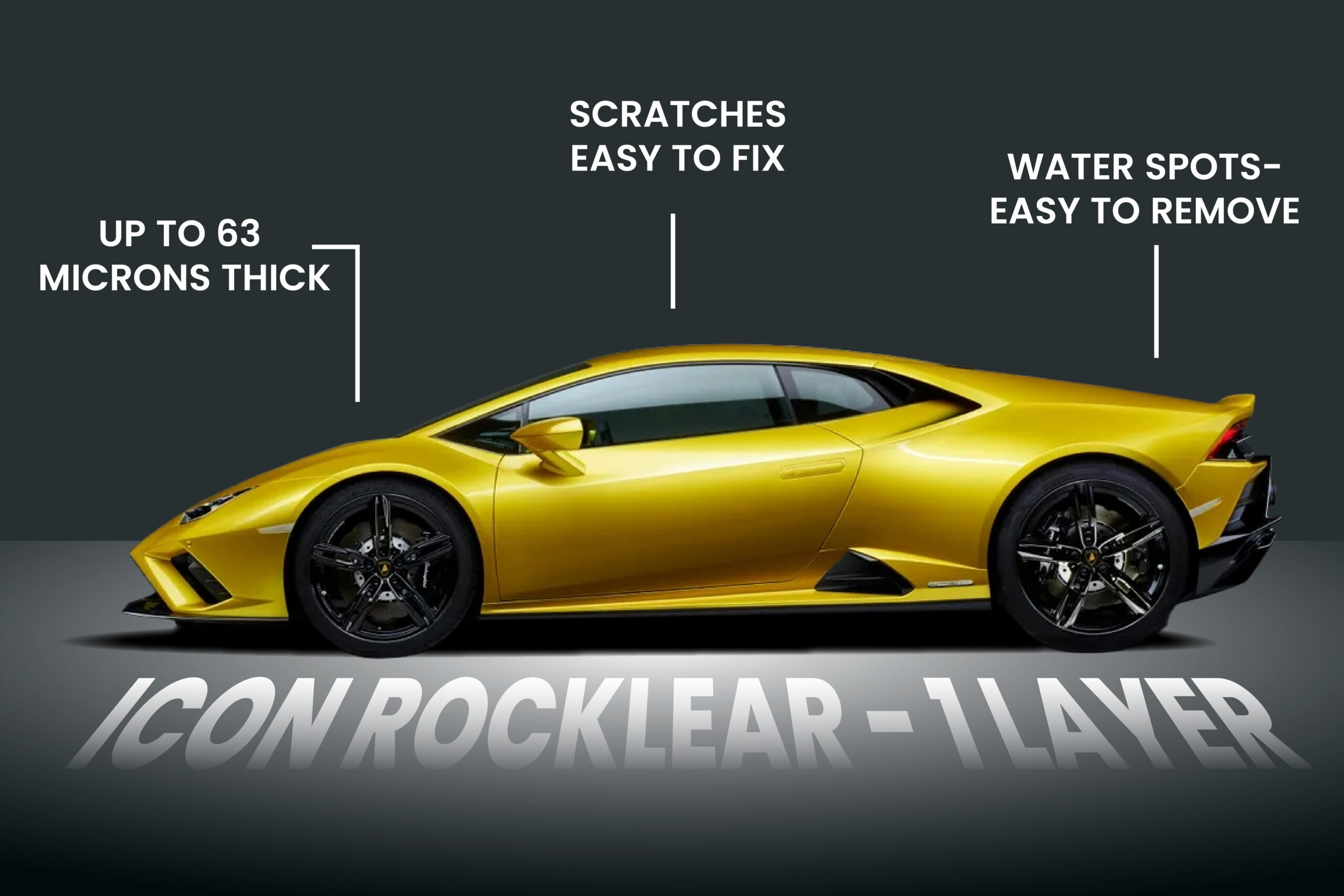
The good news? Water spots can be easily removed from Icon Rocklear surfaces. The even better news? They’re easily prevented with proper drying techniques.

Fresh water rinse is your first line of defense. After washing, give your vehicle a thorough rinse with fresh water to remove any remaining soap residue or contaminants. This final rinse helps prevent spot formation and prepares the surface for drying.

Immediate drying is crucial. Don’t let your vehicle air dry, especially if you live in an area with hard water. Those minerals in the water will leave spots as the water evaporates, and while they’re removable, they’re completely avoidable.

Proper drying technique matters. Use clean, plush microfiber towels and work in sections. Don’t drag the towel across the surface—instead, use a blotting motion to absorb water without creating friction.

Pro Tip: Emergency Preparedness

Keep a few plush microfiber drying towels in your vehicle’s trunk at all times. Unexpected rain showers happen, and being prepared means you can address water spots before they become a problem.

These emergency towels are also perfect for quick touch-ups after washing your vehicle away from home. Whether you’re at a car show, visiting friends, or traveling, having proper drying materials on hand ensures your Icon Rocklear coating always looks its best.

Step 3: Consider Monthly Professional Service

Your Icon Rocklear Certified Installer isn’t just there for the initial application. Most of our certified installers are more than happy to create monthly car washing services designed specifically for coated vehicles.

Professional maintenance offers several advantages. Your installer understands the specific characteristics of Icon Rocklear coatings and can identify potential issues before they become problems. They have the right tools, products, and expertise to maintain your coating in optimal condition.

Convenience factor can’t be ignored. Monthly professional service means you can focus on driving your vehicle while someone else handles the maintenance. It’s particularly valuable for business owners, busy professionals, or anyone who wants professional results without the time investment.

Long-term protection is enhanced when professionals handle regular maintenance. They can spot early signs of wear, address minor issues, and ensure your coating continues performing at its peak throughout the year.

Cost-effectiveness might surprise you. When you factor in the cost of quality washing supplies, your time, and the potential for mistakes, professional monthly service often represents excellent value.

What Makes This Approach Different

The Icon Rocklear washing method stands apart from traditional coating maintenance for several important reasons.

No complex requirements means you won’t need to memorize pH levels, learn specialized techniques, or invest in professional-grade equipment. Your coating works with standard car care practices, not against them.

No expensive annual inspections are required. Unlike some coating systems that demand yearly professional evaluations, Icon Rocklear is designed to perform consistently without constant professional oversight.

Flexibility in methods allows you to choose the washing approach that fits your lifestyle. Whether you prefer hands-on maintenance or professional service, your coating will respond positively.

Real-world durability means your coating performs in actual driving conditions, not just controlled environments. We understand that vehicles get driven, not stored in climate-controlled garages.

Common Mistakes to Avoid

Even with our simplified approach, there are several common mistakes that can impact your coating’s performance and appearance.

Washing in direct sunlight can cause soap and water to dry too quickly, leading to spots and streaks. Choose early morning or late afternoon washing times when possible.

Using dirty towels or mitts defeats the purpose of washing. Contaminated materials can scratch your coating and redistribute dirt rather than removing it.

Skipping the rinse step leaves soap residue that can build up over time and affect your coating’s appearance and performance.

Ignoring regular maintenance is the biggest mistake of all. Coatings aren’t magic—they require basic care to perform optimally.

The Bottom Line: Keep It Simple

Icon Rocklear coating maintenance comes down to three simple principles: wash it when it’s dirty, dry it when you’re done, and don’t overthink the process.

Your coating is engineered to outshine the competition without requiring you to become a professional detailer. By following these straightforward guidelines, you’ll maintain that showroom appearance while protecting your investment for years to come.

Protect Your Vehicle with Icon Rocklear

With the rise of paint protection coatings such as Icon Rocklear, consumers in Virginia now have access to more cost-effective and durable solutions compared to traditional ceramic coatings.

Considering the variable weather conditions in the Commonwealth, the presence of gravel on pristine highways, and the emphasis on maintaining a sleek aesthetic, ceramic coatings simply fall short. However, they do excel in safeguarding automotive glass, trim pieces, wheels, metals, plastics, and even convertible tops. Additionally, ceramic coatings offer excellent protection for interior materials like leather, vinyl, and infotainment screens.

Whether you opt for a classic ceramic coating or elevate your choice with Icon Rocklear for unparalleled protection, one thing is certain: your car deserves exceptional care in 2025. If you’re in search of the finest paint protection coating for 2025, complete the form to connect with the Icon Rocklear Virginia team.

Schedule A FREE CONSULTATION

Ceramic Coating in Virginia – Is It Worth It in 2025?

Ceramic Coating in Virginia – Is It Worth It in 2025?

Ceramic Coating in Virginia – Is It Worth It in 2025?

Virginia roads can be a challenge to navigate. One minute you’re cruising through sun-soaked highways near Norfolk, and the next, you’re dealing with a downpour or winter road salts wreaking havoc on your car’s finish. And no matter the season, UV rays, road debris, and the occasional bird bomb are always there to keep things interesting. This raises the logical question – is installing a ceramic coating in Virginia a worthwhile investment in 2025?

Ceramic coatings – specifically – professional applied nanoceramic coatings have been a favorite among car owners looking to protect their ride’s paint job. But is ceramic coating really worth the hype in 2025, especially for Virginia drivers?

What’s the real deal with these new ‘Graphene’ or ‘Triphene’ coatings? Are they truly revolutionary – or just the latest marketing hype?

Let’s break down the facts about ceramic coatings in 2025 – and whether they’re still your best option to protect cars, trucks, SUVs, and other equipment in Virginia.

Icon Rocklear Virginia provided a nice range of options. I particularly like the warranty and “fixability” of Icon Rocklear (used on the paint).The rest of the car was ceramic coated. Head to toe treatment. My car is six years old and it looks brand new. Very happy. I just use a foam cannon, rinse it off, and it sparkles! Because the car has “no substitute.”

Mike F.

Vehicle Owner

What is Ceramic Coating?

Think of ceramic coating as your car’s invisible sacrificial layer of protection. It’s a liquid polymer applied to the exterior of a vehicle, chemically or mechanically bonding with the factory paint to create a hydrophobic (water-repelling) and scratch-resistant layer.

Unlike traditional waxes or sealants, ceramic coating doesn’t just sit on top of the paint temporarily. It bonds with it, offering longer and more durable protection.

Or at least, that’s the theory – or better yet – the marketing spin.

The truth is that there are MULTIPLE types of ceramic coatings. Some are simply synthetic waxes – that are infused with ceramic ingredients. Others integrate advanced technology to produce better protection than their competitors.

Ceramic coatings for vehicles are usually made up of silicon dioxide (SiO2), titanium dioxide (TiO2), and different polymers. Silicon dioxide, or silica, is the main ingredient and forms a tough, glass-like protective layer. You’ll also find things like polysiloxanes (a type of silicone) and additives like resins and solvents, which help boost the coating’s performance.

What is a Graphene Coating?

Here is how Google’s AI defines Graphene Coating.

“A graphene coating is a type of protective coating that contains layers of carbon atoms arranged in a hexagonal lattice. This unique structure gives it exceptional strength and durability, making it one of the most advanced and effective coatings on the market.”

First off, graphene is a solid – which does contain layers of carbon atoms that are arranged in a hexagonal lattice formation. But it is IMPOSSIBLE to synthesize in a liquid. But if it was, the cost of one ounce of this type of bulletproof coating would likely cost the manufacturer more than $5,000 USD.

That’s just for the raw material – not the cost of installing that type of product on your vehicle.

Graphene coatings do NOT contain graphene. They are specialized nanoceramic coatings that have higher solid contents than most traditional SiO2 infused coatings, along with some Graphene Nanoplatelet Powder or Graphite sprinkled into the equation.

And believe it or not – it’s fairly easy to figure out which one. By law, all manufacturers are required to supply PURCHASERS and those who store products at their facilities with a Safety Data Sheet. The SDS – specifically section 15 – notates which ingredients make up the formulation.

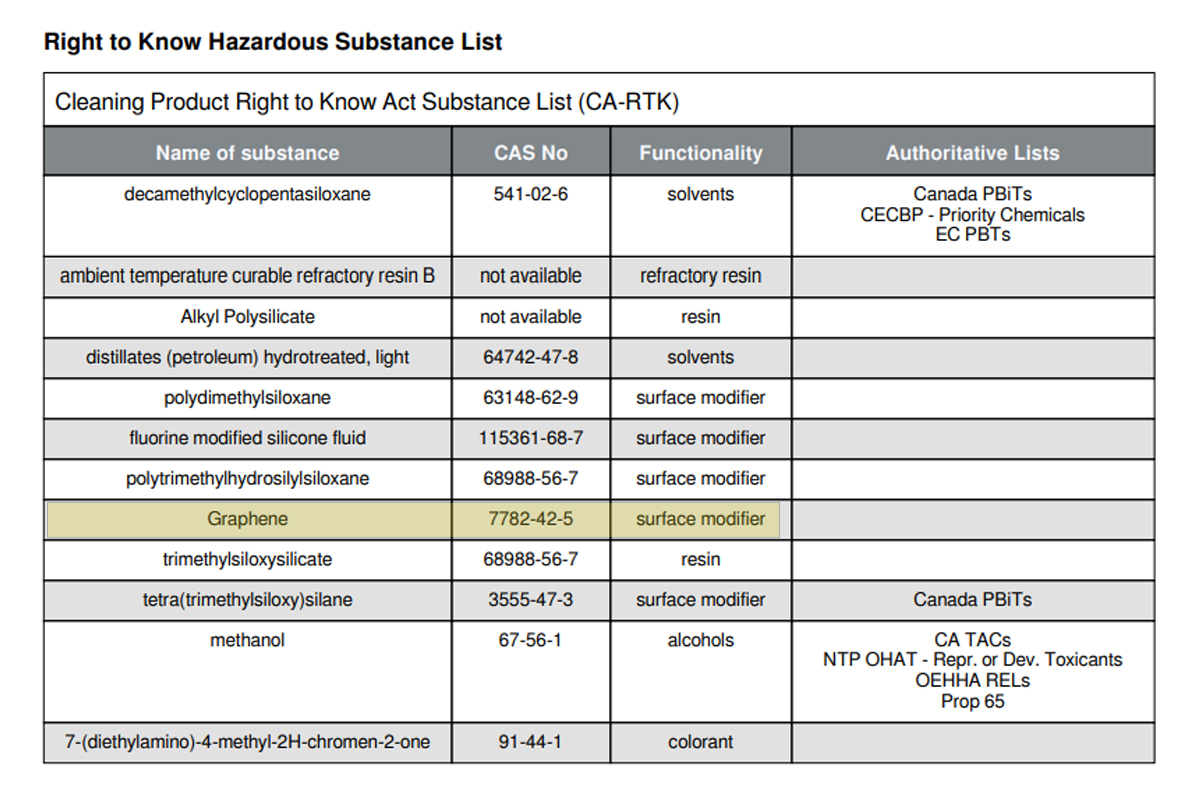
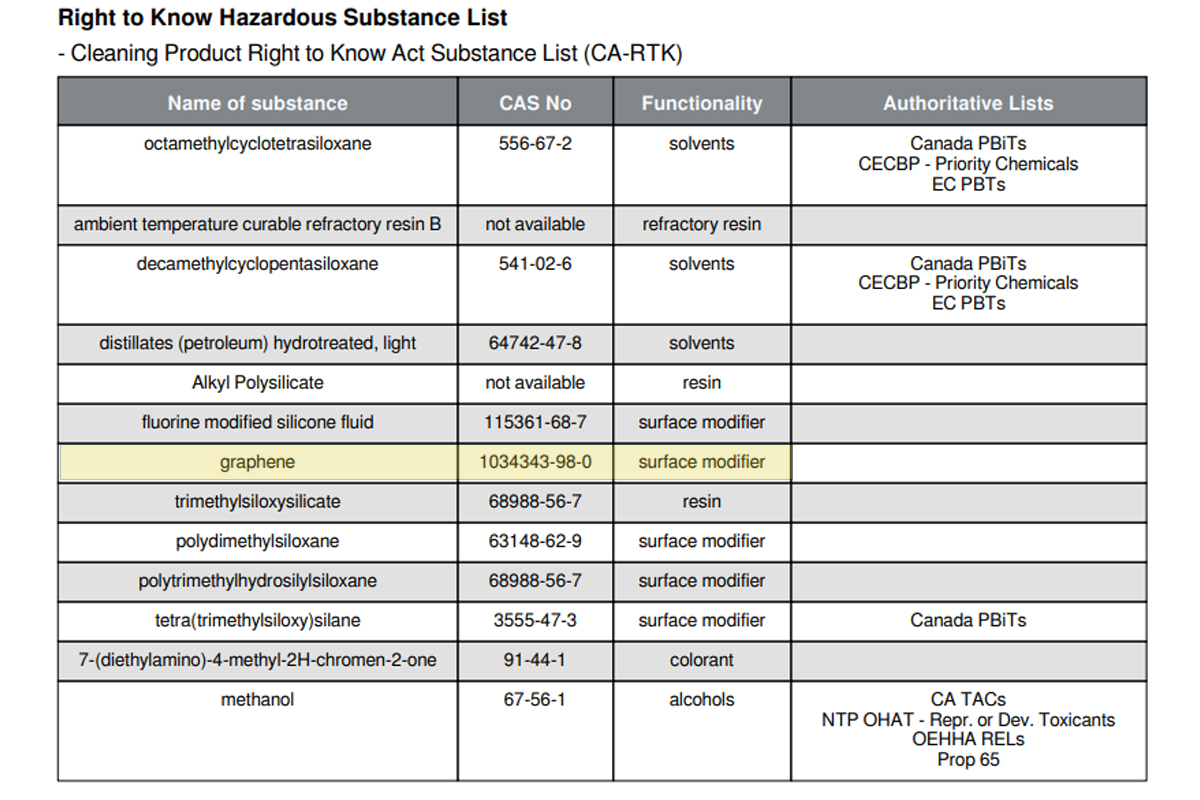
Let’s review these two SDS sheets – from a leading manufacturer of Graphene Coatings to show you what we mean.

You’ll note that the description that is highlighted says “Graphene”. But, the important item is the CAS number – which indicates what specific ingredient – or ingredient category is used.

The SDS Sheet displays CAS 7782-42-5 – which is GRAPHITE – not GRAPHENE. The other SDS Sheet (from the same manufacturer but a different grade of coating lists CAS 1034343-98-0 – which is defined as Graphene Nanoplatelet.

So what are these two products? Well – essentially, they live in the “GRAPHENE” family, but are NOT the magic bulletproof product itself. 

Graphite has a wide range of uses due to its unique properties like high thermal and electrical conductivity, lubricity, and resistance to high temperatures. It’s commonly found in pencils, lubricants, refractories (materials that withstand high heat), and batteries, particularly lithium-ion batteries.

GNP or Graphene Nanoplatelet Powder can deliver superior benefits than traditional ceramic coatings.

Increased Hardness and Strength: Adding graphene nanoplatelets (GNPs) to ceramic coatings significantly enhances their mechanical properties.

Improved Fracture Toughness: GNPs can act as crack arresters and crack bridging agents, significantly increasing the fracture toughness of the ceramic matrix. This means the coating is more resistant to cracking and failure under stress.

Increased Scratch and Abrasion Resistance: The improved hardness and toughness translate into enhanced scratch and abrasion resistance, protecting the underlying surface from wear and tear.

Enhanced Corrosion Resistance: The impermeable nature of graphene, even in nanoplatelet form, helps create a barrier against corrosive agents like water, oxygen, and salt. This effectively slows down or prevents corrosion of the underlying material.

Enhanced Hydrophobicity: The unique properties of graphene, including its hexagonal structure and chemical composition, contribute to a higher water contact angle, meaning water beads up and rolls off the surface easily.

What is a Triphene Coating?

A ‘Triphene’ coating is a thin layer of graphene applied onto various surfaces to provide enhanced corrosion resistance and hydrophobicity. It is typically created through a simple and cost-effective process, making it a promising solution for many industries.

But is Triphene a real substance? The short answer – NOT REMOTELY. “Triphene” is a brand-created term, not a scientifically recognized material or chemical. That means – it’s just a BS made up marketing term.

Key Benefits of Ceramic Coating

  • Hydrophobic Properties: Water (and the dirt it carries) slides right off. Most ceramic coating brands actively promote the need for endless washes. But – they also require customers to hand wash their vehicles frequently – in order for the coating to ‘not be clogged’.
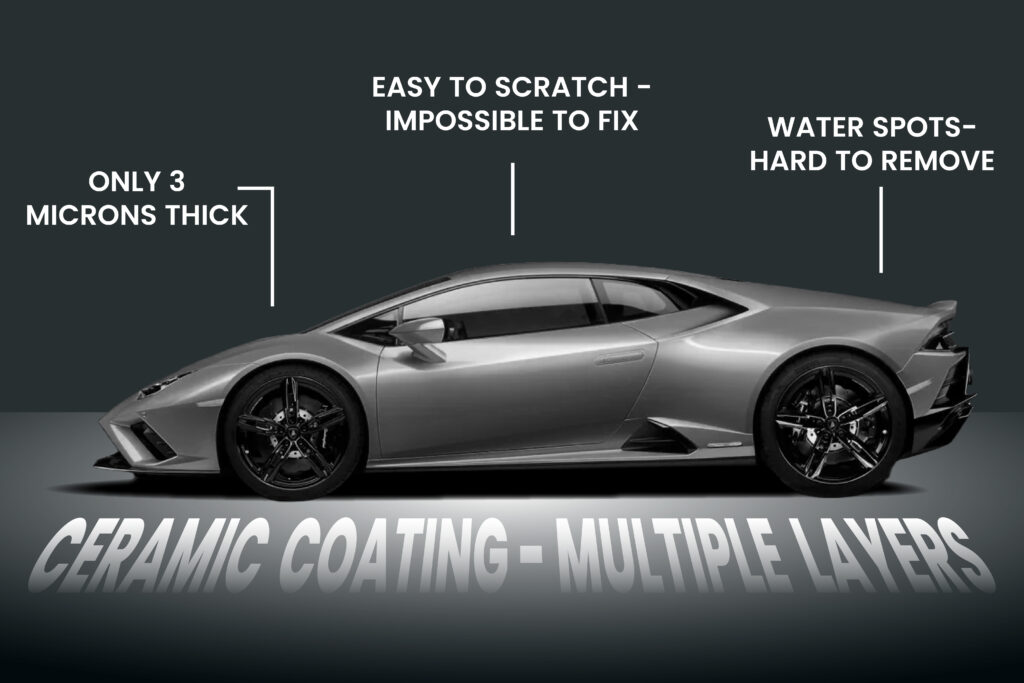
  • Scratch Resistance: While not bulletproof, ceramic coating minimizes micro-scratches from things like improper washing or pesky roadside debris. However, the truth is that the scratch resistance is targeted to the factory clear coat – not the coating itself. Ceramic coatings are very easy to scratch. And most of the time, those scratches can only be removed by paint correction – which removes the coating and can penetrate to the clear coat or worse.
  • Gloss Finish: Your car gets that fresh-from-the-lot shine and keeps it for years. Or at least as long as the coating remains intact.

But what does all that mean for Virginia drivers? More on that below.

Benefits of Ceramic Coating in Virginia

Virginia’s weather is a rollercoaster. With humid summers, wet falls, blistering UV rays, and salt-covered roads in winter, your car’s paint job takes a beating. Here’s how ceramic coating helps protect against these challenges:

  1. UV Ray Protection

Virginia summers don’t mess around with their heat. Constant sun exposure can oxidize and fade your paint. Ceramic coating’s UV-blocking properties act like sunscreen for your car, keeping its color vibrant.

  1. Weather Defense

Whether it’s hail in the Shenandoah Valley or coastal rain near Virginia Beach, ceramic coating forms a protective layer that prevents water, mud, and other contaminants from bonding to your car’s surface. The hydrophobic feature also means dirt and grime are easier to clean off.

What Are the Limitations of Ceramic Coatings?

While ceramic coatings provide numerous benefits, it’s important to be aware of their limitations as well. One limitation is that they are not scratch-proof. While the coating can help protect against minor scratches, it won’t prevent deep scratches or damage from sharp objects.

Another limitation is that ceramic coatings do not last forever. While they can provide long-lasting protection for your car, they will eventually wear off and need to be reapplied. The length of time a ceramic coating will last depends on several factors such as the quality of the product, how well it was applied, and the amount of exposure your car has to environmental elements.

Additionally, ceramic coatings cannot fix existing damage on your car’s paint. This means that any scratches, swirl marks, or other imperfections will still be visible even with a ceramic coating applied. It is important to properly prepare and correct these issues before applying a ceramic coating for best results.

Finally – ceramic coatings offer NO protection against road debris – such as twigs, gravel, or chunks of asphalt and concrete tearing up from Virginia roads.

Cost Analysis: Is It Worth It?

Ceramic coating sounds amazing, but one thing most car owners will wonder is about the cost. With professional application prices ranging from $800 to $2,500, it’s a serious investment.

But is it worth it? Here’s the breakdown.

Initial Cost

Ceramic coating does cost significantly more upfront than waxing or other temporary solutions. However, waxing typically needs to be redone every three to six months, adding up overtime.

The problem with trying to estimate ceramic coating installation cost is the multiple variables that impact the investment.

Paint Correction: This is often required before a professional shop installs a professional grade ceramic coating. The reason for this is that nanoceramic coatings amplify the condition of the surface they are installed. So – if there are tiny scratches in the clear coat – they will be more noticeable.

The level of paint correction required – or how many steps – can vary from a quick one-step polish to three or four levels. The average price range is from $300 to $2,000.

Type of Ceramic Coating: The main issue with ceramic coatings in 2025 is the saturation of different types of products. Generally – it breaks down to two unique application styles.

Spray coating: A spray on ceramic coating is a user-friendly method of applying a short-lived layer of protection against environmental exposure. They essentially replicate a lot of the features of professional grade ceramics – such as increasing the shine, making the surface hydrophobic, and other ‘stuff’. But they only hold up for a few months at most.

Nanoceramic coating: This is your traditional ceramic coating type of product. It’s a highly concentrated liquid polymer that uses nanotechnology to chemically bond to the substrate.

Long-Term Costs

This is the elephant in the room with most ceramic coating manufacturers. All of them boast the longevity of their products – ranging from one year to ‘lifetime packages’. However, in order for the customer to maintain that warranty – they’re required to follow stringent aftercare instructions – and in most cases, bring their vehicles to their authorized installer for an annual coating inspection.

So what is involved with an annual inspection?

This depends on the coating manufacturer. But in most cases, it includes:

  • A decontamination contact exterior car wash. This means they hand wash the car with a special car soap.
  • Bug removal. Sometimes if there are bugs stuck to the front end, they’ll use a clay bar or concentrated all-purpose cleaning agent to remove those bugs.
  • Ceramic Boost Spray application. The final step involves adding an ‘extra layer of protection’ on your professional, long-lasting ceramic coating. This is typically a six-month spray on coating.

The average cost for annual inspections is around $300 (for a coupe and sedan).

So, if you have a ceramic coating with a 10-year warranty, and follow the manufacturers’ requirements to maintain your coverage, you’ll add $3,000 over the lifespan of your coating. Translation – that $2,000 full vehicle exterior coating now COSTS you $5,000.

The Alternative to Ceramic Coatings in Virginia?

If you’re weighing your options, traditional car wax and paint sealants are the other popular choices. But, consider this: they fade much faster, require frequent reapplication, and don’t offer anywhere near the level of protection as ceramic coatings.

If you’re looking for something longer-lasting, wax is dead – and ceramic coatings get left in the dust.

Why Icon Rocklear Offers Better Protection

If you’re not quite sold on ceramic, there’s another player in town that’s changing the game for vehicle protection. Icon Rocklear is an advanced protective coating that beats traditional ceramic coatings in durability and performance.

  • Better Durability: Built to withstand harsher conditions and offer longer protection. Icon Rocklear is backed with a 15-year warranty – without requiring annual inspections.
  • Enhanced Gloss: Boasts a superior shine that turns heads.
  • Highest Impact Resistance: While Icon Rocklear is NOT paint protection film – or as effective at blocking all road debris, it can protect your factory paint significantly better than graphene coatings.

Icon Rocklear is quickly becoming the go-to for performance-focused and cost-efficient drivers seeking maximum protection with minimum maintenance – at an affordable price.

Is Ceramic Coating Worth It in Virginia in 2025?

With the growth of paint protection coatings like Icon Rocklear, consumers in Virginia now have more cost effective and longer-term solutions than ceramic coatings. With the variable weather in the Commonwealth, pristine highways dotted with gravel, and the importance of a sleek aesthetic, a ceramic coating just can’t cut the mustard.

However, they can be fantastic for protecting your automotive glass, trim pieces, wheels, metals, plastics, even convertible tops. Ceramic coatings are also fantastic for protecting interior materials – like leather, vinyl, even infotainment screens.

Whether you choose a classic ceramic coating or upgrade to Icon Rocklear for next-level protection, one thing’s for sure: in 2025, your car deserves and demands superior protection. If you’re looking for the best paint protection coating in 2025 – fill out the form to connect with the Icon Rocklear Virginia team.

Schedule A FREE CONSULTATION