How Are Car Detailing Products Made?

How Are Car Detailing Products Made?

How Are Car Detailing Products Made?

Ever wonder what goes into that bottle of wax or wheel cleaner sitting in your garage? It’s not just soap and water with a fancy label slapped on. The car detailing products you trust to keep your ride looking sharp are the result of serious chemistry, precise engineering, and rigorous testing.

From the lab bench to your detailing cart, every formula is designed to protect your paint, clean your wheels, and make your vehicle look better than the day it rolled off the line.

Understanding how these products are made gives you a new appreciation for what you’re putting on your car, and why professional-grade formulas outperform the cheap stuff every time.

Let’s pull back the curtain on the science and craftsmanship behind the detailing products that keep your vehicle in peak condition.
Research and Development: Where Performance Meets Precision

Before a single bottle hits the shelf, car detailing products go through extensive research and development. Chemists and engineers work together to create formulas that deliver real results without damaging surfaces. This isn’t guesswork; it’s methodical testing on different paint types, clear coats, plastics, metals, and glass to ensure compatibility and safety.

R&D teams test for pH balance, surface adhesion, cleaning power, and durability. They simulate real-world conditions: scorching sun, freezing temps, road salt, tar, bug splatter, you name it. Products that can’t stand up to these challenges don’t make the cut. The goal is simple: build a product that works as hard as you do and protects your investment for the long haul.

Safety is non-negotiable. Before any product reaches consumers, it’s evaluated for skin contact, inhalation risk, and environmental impact. This ensures that what you’re spraying on your car won’t hurt you, your garage floor, or the watershed when you rinse it off.

Key Ingredients: The Building Blocks of a Great Detailing Product

Professional car detailing products rely on carefully selected ingredients that each serve a specific purpose. Here’s what’s doing the heavy lifting inside those bottles:

Surfactants

Surfactants are the workhorses of any cleaning product. These molecules have a dual nature—one end attracts water, the other attracts oil and dirt. When you spray a detailing product on your car, surfactants break down grime and lift it away from the surface so it can be rinsed off cleanly. Without surfactants, you’d just be pushing dirt around.

Polymers

Polymers are the secret behind long-lasting protection. They form a thin, flexible layer over your paint or clear coat that repels water, resists UV damage, and keeps contaminants from bonding to the surface. Think of polymers as the invisible shield that keeps your finish looking fresh between washes.

Waxes

Natural and synthetic waxes add gloss and create a hydrophobic barrier that makes water bead up and roll off. Carnauba wax, sourced from Brazilian palm trees, is prized for its deep shine and smooth finish.

Synthetic waxes offer longer-lasting protection and can be engineered for specific performance characteristics. Many high-end products blend the best of both worlds.

Solvents and Carriers

Solvents help dissolve stubborn contaminants like tar, tree sap, and adhesive residue. Carriers ensure the active ingredients spread evenly and penetrate where they’re needed. These components are carefully balanced to maximize cleaning power without harming your vehicle’s finish.

Additives

From UV inhibitors to anti-static agents, additives fine-tune a product’s performance. They might enhance shine, prevent streaking, or extend shelf life. Every additive is there for a reason, and professional formulations use them strategically.

The Manufacturing Process: Precision From Start to Finish

Once the formula is locked in, it’s time to scale up production. Manufacturing car detailing products is a precise operation that requires consistency, quality control, and attention to detail at every step.

Precise Blending

Ingredients are measured and mixed in controlled environments using industrial blenders. Temperature, mixing speed, and order of addition all matter. Get it wrong, and the formula won’t perform as intended. Automated systems ensure every batch meets exact specifications, so the product you buy today performs just like the one you bought last year.

Quality Control

Before any product leaves the facility, it undergoes rigorous quality control testing. Samples from each batch are checked for viscosity, pH, color, scent, and performance. Labs run side-by-side comparisons to ensure consistency. If a batch doesn’t meet standards, it doesn’t ship. Period.

Bottling and Packaging

Once a batch passes inspection, it’s bottled, labeled, and sealed. Packaging isn’t just about looks—it’s engineered to protect the product from light, air, and contamination. Spray nozzles are tested for even distribution. Caps are torqued to precise specifications. Every detail matters when you’re building a product that car owners can trust.

Documentation and Traceability

Professional manufacturers maintain detailed records of every batch, including ingredient sources, production dates, and test results. This traceability ensures accountability and allows for rapid response if any issue arises. It’s another layer of quality assurance that separates the pros from the pretenders.

Sustainability: Cleaning Green Without Compromise

The detailing industry is shifting toward more sustainable practices, and for good reason. Car owners want products that protect their vehicles and the environment. Modern formulations are embracing biodegradable surfactants, plant-based ingredients, and concentrated formulas that reduce packaging waste.

Eco-friendly doesn’t mean weakness. Today’s green detailing products deliver professional-grade results while minimizing environmental impact. Biodegradable formulas break down naturally after use, reducing harm to aquatic ecosystems. Waterless wash products dramatically reduce water consumption, perfect for areas under drought restrictions or for detailers who want to conserve resources.

Manufacturers are also rethinking packaging. Refillable containers, recycled plastics, and concentrated formulas that reduce shipping weight all contribute to a smaller carbon footprint. Sustainability isn’t a gimmick—it’s the future of responsible vehicle care.

Why Professional-Grade Manufacturing Matters

You could grab a bottle of all-purpose cleaner from the grocery store and call it good. But here’s the thing: your car isn’t a kitchen counter. It deserves products engineered specifically for automotive surfaces, with formulas that protect rather than strip away protective layers.

Professional-grade detailing products are designed with vehicle longevity in mind. They preserve clear coats, prevent oxidation, and keep your paint looking showroom-fresh for years. Cheap alternatives might seem like a bargain, but they often contain harsh chemicals that degrade finishes over time or leave residues that attract more dirt.

When you invest in quality detailing products, you’re investing in your vehicle’s future. The right products extend the life of your paint, maintain resale value, and keep your ride looking its best mile after mile. That’s the difference precision manufacturing makes.

The Bottom Line: Science, Craftsmanship, and Performance

Car detailing products aren’t magic—they’re the result of careful science, rigorous testing, and precision manufacturing. From the chemistry lab to the production floor, every step is designed to deliver a product that performs, protects, and lasts. Understanding what goes into these formulas helps you make smarter choices about what you use on your vehicle.

So the next time you reach for that bottle of wax or spray cleaner, you’ll know there’s a whole lot more going on than meets the eye. And that’s worth appreciating.
Schedule A FREE CONSULTATION

Why Virginia Road Salt Ruins Car Paint

Why Virginia Road Salt Ruins Car Paint

Why Virginia Road Salt Ruins Car Paint

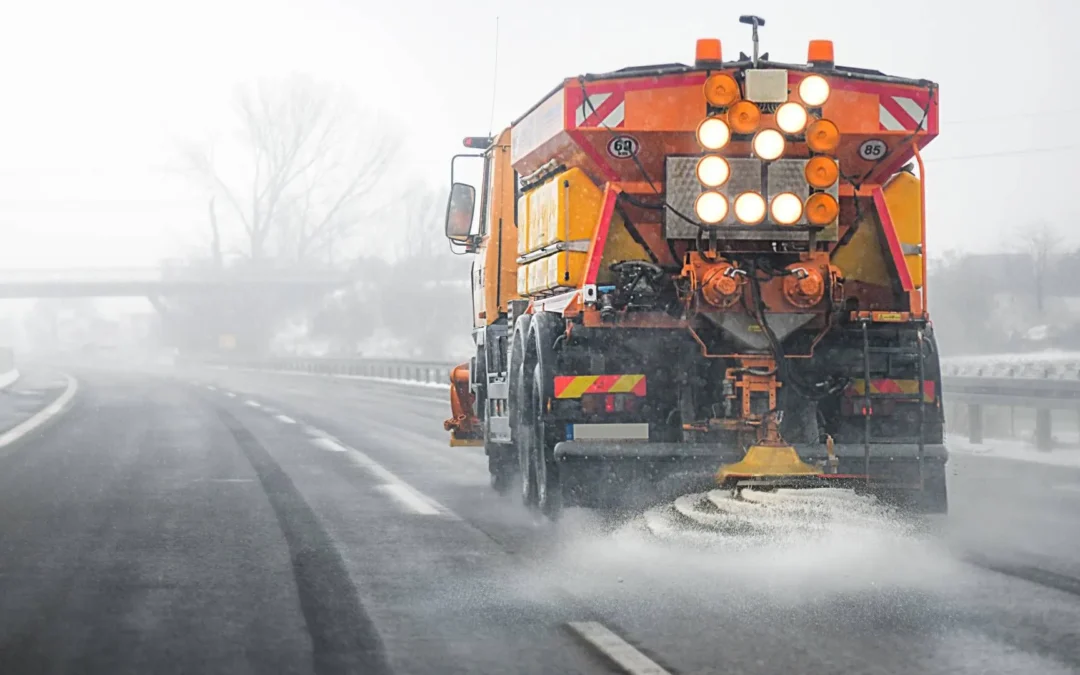
Virginia winters are known for their unpredictability. One week might bring mild temperatures, and the next could bury the state in ice and snow. When the forecast calls for freezing conditions, the Virginia Department of Transportation (VDOT) acts quickly, treating highways and local roads with thousands of tons of rock salt and liquid brine.

While these measures are essential for keeping drivers safe and traffic moving, they come with a hidden cost. That same substance melting the ice on I-95 or I-81 is simultaneously waging war on your vehicle’s exterior.

For car owners in the Commonwealth, understanding the relationship between road salt and automotive paint is crucial to maintaining their vehicles’ value and appearance.

Ignoring the buildup of winter grime isn’t just a cosmetic issue; it significantly accelerates your car’s aging. By understanding how salt works and taking the right preventive steps, you can keep your car looking showroom-ready even after the harshest winter storms.

The Chemistry of Corrosion

To understand why road salt is so destructive, we have to look at the chemistry involved. Road salt is typically sodium chloride or calcium chloride. When this salt mixes with melting ice or snow, it creates a saline solution.

This mixture acts as an electrolyte, which speeds up the chemical reaction between the iron in your car’s body and the oxygen in the air. This process is known as oxidation, or more commonly, rust.

While modern cars come with clear coats designed to seal the paint and underlying metal, road salt is abrasive. As you drive, tiny particles of salt, dirt, and gravel bombard your vehicle, creating microscopic chips and scratches in the clear coat.

The saline solution seeps into these imperfections, getting underneath the paint layer. Over time, this causes the paint to bubble, flake, and eventually peel away, leaving the metal exposed to rapid corrosion.

The Danger Zones: Areas Most Susceptible to Damage

Salt doesn’t affect every part of your vehicle equally. The damage usually begins in areas where snow and slush accumulate and sit for long periods.

The Undercarriage
This is the most vulnerable part of your vehicle because it is completely exposed to the road surface. Since you rarely see it, rust can form and spread extensively before you ever notice a problem.

Wheel Wells
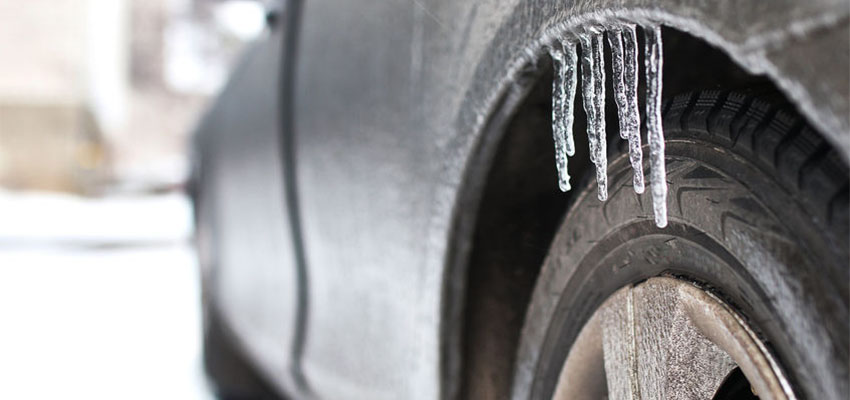
Your tires are constantly kicking up a spray of salty slush. This mixture packs into the wheel wells and clings to the liner and the fender edges. If not rinsed out, this corrosive poultice sits against the body panel for days or weeks.

Lower Door Panels and Rocker Panels
These areas take the brunt of the spray from your own tires and passing vehicles. They are high-impact zones for road debris, meaning they likely already have small chips where salt can enter.

Effective Protective Measures

You don’t have to leave your car in the garage until spring to keep it safe. A few proactive maintenance steps can drastically reduce the impact of road salt.

Strategic Washing

The most effective way to combat salt damage is to remove the salt. During the winter months, try to wash your vehicle every 10 to 14 days, especially after a snowstorm once the roads have dried.

Avoid washing your car if the temperature is below freezing, as this can freeze your locks and door seals. When you do wash it, opt for a high-pressure spray that can reach inside the wheel wells and, most importantly, spray the undercarriage. Many automatic car washes offer an undercarriage blast cycle—this is worth the extra few dollars in winter.

Waxing and Sealing

Think of wax as a sacrificial layer. It provides a barrier that the salt has to eat through before it can reach your clear coat. Applying a high-quality polymer wax or sealant right before winter begins gives your paint a fighting chance. It also makes the surface slicker, making it harder for ice and salty slush to stick to the panels.

Advanced Protective Coatings

For those who want more durability than traditional wax, modern protective coatings offer a stronger shield. Icon Rocklear, for example, creates a chemical bond with the paint, offering a hard, hydrophilic surface that repels water and contaminants more effectively than wax or even ceramic coatings.

Keep Your Vehicle Pristine This Winter

Living in Virginia means dealing with road salt, which is inevitable, but salt damage doesn’t have to be. By understanding how corrosion works and maintaining regular washes, you can significantly extend your vehicle’s life.

However, if you are looking for the ultimate defense against the harsh chemicals used on Virginia roads, you need a solution tougher than standard wax or factory clear coats.

For the highest level of protection, you should have a certified installer in Virginia apply Icon Rocklear to your vehicle. It provides a robust, protective coating that is far superior to traditional methods, ensuring your paint remains flawless regardless of what the winter season brings.

Schedule A FREE CONSULTATION

How to Remove Salt Brine from Your Car in Virginia

How to Remove Salt Brine from Your Car in Virginia

How to Remove Salt Brine from Your Car in Virginia

You know the drill. It’s winter in Virginia, the forecast calls for a dusting of snow, and suddenly the roads look like they’ve been striped by a giant skunk. That’s salt brine—the Department of Transportation’s favorite weapon against icy roads.

While we appreciate not sliding into a ditch on I-95, this stuff is absolute kryptonite for your vehicle. It sticks like glue, creeps into every nook and cranny, and starts eating away at your undercarriage before the snow even falls. If you care about your ride’s performance and longevity, letting that brine sit isn’t an option.

Here is the lowdown on why this stuff is nasty, what it does to your rig, and exactly how to get it off.

Why VDOT Loves the Liquid Stuff

Before we get into cleaning it off, let’s talk about why it’s there. Salt brine is a solution of water and sodium chloride (good ol’ rock salt) mixed at a specific concentration—usually around 23%.

VDOT sprays this stuff before the storm hits. It prevents snow and ice from bonding to the pavement, making it easier for plows to clear the roads later. It’s effective, it’s cheaper than dropping tons of rock salt after the fact, and it keeps traffic moving. From a safety standpoint, it’s a no-brainer. From a car enthusiast’s standpoint? It’s a headache waiting to happen.

The Silent Killer: What Brine Does to Your Truck

The problem with brine is exactly what makes it effective: it’s a liquid. Unlike rock salt, which bounces off your bumper, brine is sprayed as a fine mist that dries into a chalky film. When you drive over treated roads, your tires kick that mist up into your wheel wells, suspension components, brake lines, and exhaust system.

Once it re-hydrates (thanks to rain, snow, or even humidity), it activates. That salty solution accelerates rust and corrosion faster than you can say “check engine light.” We’re talking rusted-out mufflers, seized bolts, corroded brake lines, and frame rot. For modern vehicles with complex sensors and wiring harnesses beneath the surface, corrosion can cause expensive electrical gremlins, too.

Step-by-Step: How to De-Brine Your Machine

Getting this stuff off requires more than a quick splash with a garden hose. You need to be thorough.

Don’t Wait Until Spring

The biggest mistake people make is waiting until winter is over to wash their car. By then, the damage is done. You need to wash the brine off as soon as the roads are dry and clear.

Hit the Undercarriage First

This is where the battle is won or lost. If you have a pressure washer, get an undercarriage attachment (basically a wand on wheels that sprays upward). If you’re doing it DIY style at a coin-op wash, get down on one knee and spray upwards into the chassis. Focus on the frame rails, suspension arms, and inside the wheel wells.

Use a Neutralizing Agent

Water alone helps, but salt is stubborn. Use a salt-neutralizing wash solution. These products chemically react with the salt, breaking its bond with the metal and neutralizing its corrosive effects. You can find these at most auto parts stores or online detailing shops. Mix it into your foamer or bucket wash.

Here is our PRO TIP: After you’ve rinsed down your vehicle for the pre-wash, use a soap-based, pH-neutral, and ready-to-use All Purpose Cleaner as a pre-wash.

Don’t bother with a foam cannon (unless you have a concentrated version of this type of product. Simply spray the APC as a mist onto the affected panels (usually the lower rocker panels, front bumper, hood, fenders, and the back of the car).

Let it dwell for about 3 minutes, then continue to the next step.

The Two-Bucket Method

When washing the paint, use the two-bucket method to avoid scratching your clear coat with the grit trapped in the brine. One bucket for soapy water, one for rinsing your mitt. Wash from the top down.

The video above is a great tutorial from Icon Rocklear Virginia’s founder, Leland Jones showing how he recommends washing a vehicle.

Dry It Off

Don’t let the water sit and freeze. Dry the vehicle thoroughly with clean microfiber towels. Opening your doors, hood, and trunk to wipe down the jambs is a pro move—brine loves to hide in those seals.

Prevention: Armor Up

The best offense is a good defense. Before the first flake falls, consider applying a protective coating to your vehicle’s underbelly.

Spray Wax: These wax-based sprays are very easy to use. However, they’ll impact the hydrophobic properties if you have a ceramic coating. But, they incredibly effective at repelling water and salt.

Ceramic Coatings: For the paint, a good ceramic coating provides a hydrophobic layer that makes it harder for the brine to stick in the first place.

Icon Rocklear: If you’re seeking the best paint protection coating that has the highest corrosion resistance, Icon Rocklear is the product you need. It’s significantly thicker, stronger, and more durable than ceramic coatings.

Plus, if you fail to stay on top of removing salt brine from the coating, and it etches the coating (which is very likely), Icon Rocklear-certified installers in Virginia can easily remove and repair that damage – without removing the coating.

Keep It Clean, Keep It Running – But Protect It!

Living in Virginia means dealing with fickle weather and aggressive road treatments. Salt brine is a necessary evil for safe commuting, but it doesn’t have to be a death sentence for your vehicle.

A little preventative maintenance and a thorough wash routine will keep the rust demons at bay. Take care of your machine, and it’ll take care of you. Now, go get that hose.

If you’re curious about having a certified Icon Rocklear installer in Virginia protect your vehicle’s paint from what life and Mother Nature throw at it, fill out the form below.

Schedule A FREE CONSULTATION

5 Questions to Ask Your Virginia Car Coating Installer

5 Questions to Ask Your Virginia Car Coating Installer

5 Questions to Ask Your Virginia Car Coating Installer

Driving in Virginia is a mixed bag. You’ve got some of the most beautiful scenic routes in the country, like the Blue Ridge Parkway, but you’ve also got the nightmare that is I-95 construction, unpredictable weather, and enough bug splatter in the summer to ruin a front bumper in a single weekend.

You bought a performance vehicle because you love to drive, not because you love scrubbing road tar off your clear coat every Sunday morning.

That’s where paint protection comes in. A high-quality coating isn’t just about vanity; it’s about asset protection. It keeps your ride looking like it just rolled off the showroom floor and makes maintenance a breeze.

But here is the hard truth: the detailing industry is unregulated. Any guy with a buffer and a bottle of product can claim to be a “pro.”

Handing over the keys to your pride and joy requires trust. You need to know that the person touching your paint knows what they are doing. Before you commit to a shop, you need to grill them. Here are the five non-negotiable questions you need to ask a car coating installer in Virginia.

Question 1 – Are you certified and insured?

This seems like a no-brainer, but you would be shocked at how many “garage warriors” are operating without a safety net. We love the entrepreneurial spirit—it’s the American way—but when it comes to your vehicle, you can’t rely on a handshake and good vibes.

Ask to see proof of insurance. We aren’t talking about their personal auto policy. You want to see General Liability and Garage Keepers insurance. If they slip and drop a polisher on your hood, or if a storm hits their shop while your car is overnighting, you need to know you’re covered. If they hesitate or give you a vague answer, walk away.

Next, ask about certification. Professional-grade coatings aren’t the same as the spray wax you pick up at the local auto parts store. They require specific application techniques to bond correctly.

Manufacturers like Icon Rocklear don’t just sell to anyone; they require territory owners and their installers to undergo rigorous training. Certification proves the installer has invested time and money into their craft and knows the specific chemistry of the product they are applying.

Question 2 – What brands of coatings do you use?

Not all coatings are created equal. The market is flooded with products claiming to be “ceramic,” “graphene,” or “diamond-infused,” but a lot of it is marketing fluff. You want to know exactly what is going on your paint.

A reputable installer will be proud of the products they use. They should be able to explain why they chose that specific brand. Is it known for extreme durability? Does it offer superior slickness? How does it handle the humidity in Virginia during the curing process?

If they are using a consumer-grade product that you could buy online for $50, why are you paying them premium labor rates? You go to a pro for professional results using professional materials.

Listen for recognized, high-end brand names. If they are evasive or tell you it’s a “secret house blend,” that’s a red flag. You want transparency, not mystery chemicals.

Question 3 – What is your preparation process?

This is the big one. This is where the men are separated from the boys. A coating is optically clear. It acts like a magnifying glass. If you apply a coating over swirled, scratched, or dull paint, you are essentially locking those defects in for the lifespan of the coating. You’re putting lipstick on a pig.

A true professional understands that the “coating” is just the cherry on top. 90% of the results come from the preparation and paint correction. Their answer to this question should be detailed and technical. You want to hear about:

  • Decontamination: How do they remove iron deposits (rail dust) and embedded road grime? A simple wash isn’t enough. They should mention clay-bar treatment and chemical decontamination as components of this step.
  • Paint Correction: Do they use a one-step polish or a multi-stage compound and polish? They need to level the clear coat to remove swirls and scratches before sealing it.
  • Panel Wipedown: How do they ensure all polishing oils are removed so the coating bonds properly?

If their “prep” consists of a quick wash and a wipe down with alcohol, run. Your paint deserves better.

Question 4 – Do you offer a warranty?

We’re talking about a real, written warranty, not a “guarantee” that disappears when you drive off the lot. High-quality coatings are an investment, and that investment should be protected.

However, be realistic. No coating makes a car bulletproof. If an installer tells you their coating will PREVENT rock chips or that you’ll never have to wash the car again, they are lying to you.

A legitimate warranty or guarantee covers product failure. It covers things like bubbling, peeling, or significant loss of gloss and hydrophobicity within the guarantee period, provided you’ve followed the maintenance instructions.

However, ALL MANUFACTURERS has their OWN unique warranty or guarantee standards.

Ask to see the warranty documentation before you book. Does it require annual inspections to remain valid? Is it backed by the manufacturer or just the shop? A manufacturer-backed warranty is the gold standard because it means the company stands behind the installer’s work.

Question 5 – Can I see examples of your previous work?

In the digital age, anyone can steal a photo of a Ferrari from Instagram and claim it’s their work. Don’t settle for a curated feed of stock photos. You want to see real cars they have worked on, preferably in their shop.

When looking at their portfolio or walking around their shop, look closely at the reflections. You want to see sharp, crisp reflections in the paint, not hazy blobs. Look at the edges of the panels—are there white residue marks left behind? That’s a sign of sloppy workmanship.

If you can, ask to see a vehicle under inspection lights. Paint can look perfect in the shade but look like a spiderweb of scratches under direct LED light or the sun. A confident installer has nothing to hide and will happily shine a light on their work to show you the defect-free finish.

Don’t Settle for Second Best

Your vehicle is an extension of your personality. It’s a machine built for performance, and it deserves to be treated with respect. Asking these five questions helps you weed out the amateurs and find a partner who cares about your car as much as you do.

If you are looking for the absolute best protection money can buy, look no further than Icon Rocklear. As we head into 2026, Icon Rocklear remains the undisputed heavyweight champion of paint protection coatings. It offers depth, brilliance, and durability that traditional ceramics just can’t touch.

Fortunately for you, Virginia is home to some of the finest detailers in the nation. There are currently 10 certified Icon Rocklear installers across the state, ready to give your vehicle the armor it needs to survive the roads and look good doing it. Do your homework, ask the hard questions, and drive with confidence.

Schedule A FREE CONSULTATION

Understanding the Coating Hardness Testing ASTM D3363

Understanding the Coating Hardness Testing ASTM D3363

Understanding the Coating Hardness Testing ASTM D3363

Let’s be real for a second. You spend good money on your ride. Whether it’s a lifted truck that eats mud for breakfast or a sleek sedan that turns heads on the highway, you want that paint job to last. You’ve probably heard folks throwing around terms like “ceramic coating,” “9H hardness,” and “scratch resistance” like they’re going out of style. But what does any of that actually mean?

If you’re looking to protect your investment, you need to understand the science behind the shine. That brings us to the Pencil Hardness Test, specifically the ASTM D3363 standard. It sounds like something from a high school geometry class, but it’s actually the industry standard for measuring just how tough a coating really is.

Before you drop hundreds (or thousands) on paint protection, you need to know if the product can actually take a beating. We’re going to break down exactly what this test is, how it works, and why it matters for your vehicle. No fluff, just the facts.

What is ASTM D3363?

In the world of testing and materials, ASTM International (formerly known as the American Society for Testing and Materials) is the big dog. They set the rules. When you see “ASTM” attached to a test, you know it’s a standardized, recognized procedure, not just some marketing gimmick cooked up in a back office.

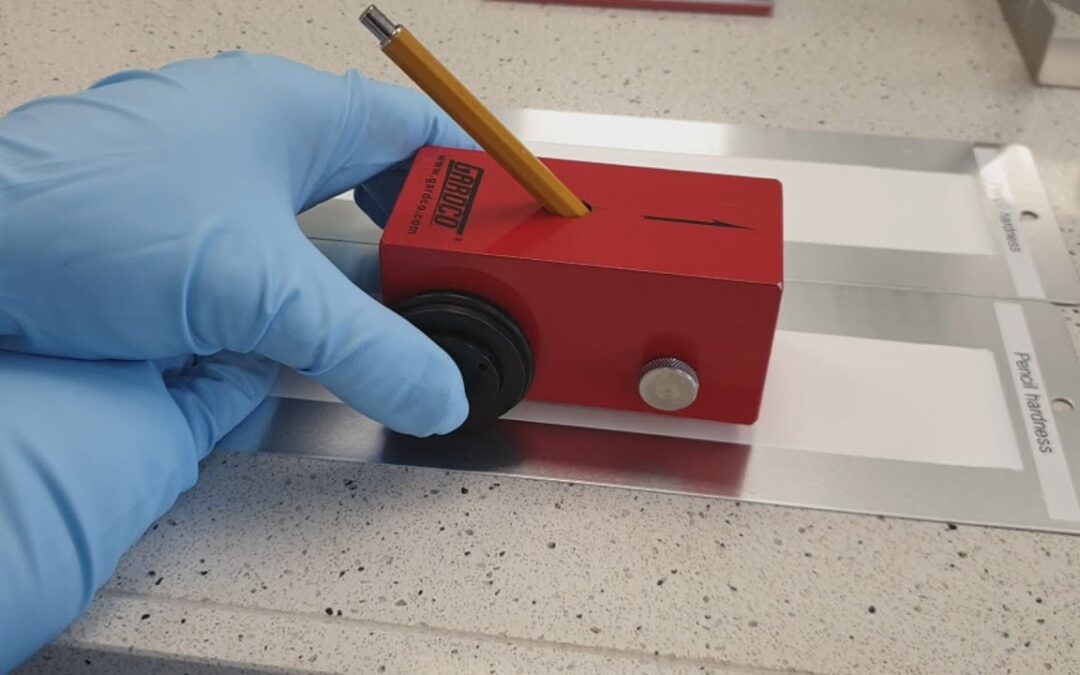
ASTM D3363 is the specific designation for the “Standard Test Method for Film Hardness by Pencil Test.” In plain English? It’s a way to measure how hard a coating—like paint, varnish, or lacquer—is by trying to scratch it with pencils of varying hardness.

This standard is crucial because it gives manufacturers and customers a common language. If one company says their coating is “hard” and another says theirs is “super hard,” that means nothing. But if one rates a 2H and the other rates a 9H under ASTM D3363, now we’re comparing apples to apples. It provides a quantifiable benchmark for durability.

How the Pencil Hardness Test Works

The concept is deceptively simple, but the execution requires precision. You don’t just grab a No. 2 pencil from your junk drawer and start stabbing your hood. The test is performed under controlled conditions to ensure accuracy.

The Setup

First, the coating needs to be fully cured. You can’t test wet paint. The test is usually done on a flat, rigid surface. The pencils used aren’t your standard writing utensils; they are calibrated drafting pencils ranging from soft (6B) to hard (9H).

The Procedure

The operator prepares the pencil by stripping the wood away to expose the lead, leaving it as a flat cylinder. They then hold the pencil at a 45-degree angle against the coated surface.

Here is the kicker: they push the pencil forward with a specific amount of force. The goal is to see if the pencil cuts through or gouges the coating.

The Rating

The test starts with the hardest pencil (9H). If that pencil scratches the surface, they move down to the next hardest (8H), and so on. The “Pencil Hardness” rating is defined by the hardest pencil that fails to scratch the coating.

So, if a 9H pencil scratches the paint, but an 8H pencil slides across without leaving a mark, the coating is rated 8H. It’s a process of elimination that separates the weak coatings from the heavy-duty protectors.

Breaking Down the Scale: What Pencils are Required?

To understand the results, you have to understand the tools. The scale used in ASTM D3363 covers a wide spectrum of graphite hardness.

The scale typically runs like this, from softest to hardest:

  • 6B – B: These are the softest leads. Think artists’ sketching pencils. They are dark, smudgy, and unlikely to scratch anything harder than butter.
  • HB – F: This is the middle ground. Your standard school pencil falls around here.
  • H – 6H: Now we are getting into the harder stuff. These are used for technical drafting where fine lines are needed.
  • 7H – 9H: This is the top tier. These leads are extremely hard and contain more clay filler than graphite.

When a ceramic coating company claims a “9H” hardness rating, they are stating that their product can withstand the pressure of a 9H pencil without gouging. That is the top of the scale for this specific test.

A Note on the Myth of 10H: You might see some marketing claiming “10H” hardness. On the standard pencil scale, 9H is usually the max. Anything claiming to be harder than that is often referencing the Mohs scale of mineral hardness (where diamond is a 10), which is an entirely different measurement system. And just for clarification, there is NO liquid coating that is as strong as a diamond! Don’t get fooled by mixed-up metrics.

*SPECIAL NOTE: There are some labs – mainly in Japan and Korea- that offer a 10H pencil scale test. This uses a specialized 10H-rated graphite pencil lead; however, it is not recognized as an ASTM Standard method of testing. If you see a coating that claims to have been tested to 10H hardness ASTM, you can and should immediately eliminate that from your list of coating options. 

What Materials Can Be Tested?

While we are focused on vehicle paint and protection here, the ASTM D3363 test is versatile. It’s not just for cars. It can be performed on a variety of substrates, provided the coating is applied correctly.

Common materials tested include:

  • Organic Coatings: Paints, varnishes, lacquers, and resins.
  • Metal Substrates: The test is frequently performed on coated metal panels (like car body panels) to simulate real-world application.
  • Wood and Plastic: As long as the surface is rigid enough to withstand the pressure of the pencil without deforming the material underneath, it can be tested.

However, the substrate matters. If you apply a super-hard coating to a soft, spongy rubber surface, the test won’t be accurate because the material underneath will give way before the coating does. For the most accurate results, a rigid backing—like steel or glass—is preferred.

The Good, The Bad, and The Scratchy

Like any scientific test, the Pencil Hardness Test has its pros and cons. It’s the industry standard for a reason, but it’s not the only factor you should care about.

The Advantages

  1. Standardization: Because it follows ASTM protocols, it allows for direct comparison between different brands and products.
  2. Cost-Effective: It doesn’t require million-dollar machinery. This keeps the cost of development down, which eventually helps keep the price down for you, the consumer.
  3. Speed: It provides relatively quick results regarding cure validation and coating consistency.

The Disadvantages

  1. Human Error: Since the test is often done by hand, there can be slight variations in the angle or pressure applied by the operator.
  2. Limited Scope: It measures scratch hardness, specifically “gouge” resistance. It doesn’t necessarily measure impact resistance (like a rock chip) or abrasion resistance (like swirl marks from a dirty rag).
  3. The Substrate Factor: As mentioned earlier, the hardness of the material under the paint can influence the result. A hard coating on a soft hood might test lower than the exact same coating on a hard glass panel.

The Bottom Line

When you are looking to armor up your truck or car, seeing a “9H” rating on a bottle of ceramic coating is a good sign. It means the product has been tested against the toughest standard in the pencil hardness game. It tells you that the coating creates a rigid, durable shell that resists gouging better than factory clear coat.

However, don’t treat it as a magic forcefield. A 9H rating means it’s tough, not invincible. It will help prevent light scratches from bushes on the trail or poor washing techniques, but it won’t stop a shopping cart traveling at Mach 1.

Use the ASTM D3363 rating as a baseline. It proves the manufacturer cares about standards and testing. Combine that knowledge with proper maintenance and realistic expectations, and you’ll keep your ride looking showroom ready for the long haul.

How to Shop for High Quality Coatings Like a Pro

Next time you are considering a ceramic coating service or buying a high-end protectant, ask the hard questions.

  1. Ask for the Testing Data: Professional coating manufacturers should have Technical Data Results openly available to consumers. This includes the completed ASTM test, the test’s purpose, and the criteria (how the coating was tested and the results).
  2. Look for the Official ASTM Codes: Don’t just look for “Salt Resistant.” Look for “ASTM B117.”
  3. Trust American Standards: While there are other standards organizations (like ISO), ASTM is homegrown and rigorous. Supporting companies that test to these standards often means supporting quality manufacturing.

Don’t Gamble with Your Paint

Your vehicle is likely the second most significant investment you’ll make, right after your house. You wouldn’t use unverified shingles on your roof, so why put unverified chemicals on your paint?

ASTM testing is the benchmark for quality. It separates the pros from the pretenders. It gives you the confidence that the “armor” you’re putting on your car is actually armor, not just a glossy raincoat. When you choose products that adhere to these standards, you aren’t just protecting a car; you’re protecting your wallet and your peace of mind. This is why Icon Rocklear invested THOUSANDS of dollars in ASTM testing nearly a decade ago when they launched their paint protection coating. And you’ll see the completed tests, along with results, directly on their HOME PAGE.

Drive it hard, keep it clean, and trust the science.

Schedule A FREE CONSULTATION